Looking for Something?

Monday, March 25, 2019

Bing Bada Boom Bing Bong Clock

We have focused on the concept of Time for the last unit of Light, Sound, and Time. I have learned so many new concepts. I was surprised to learn that time is relative, meaning that time can change depending on how close an object gets to the speed of light. For our FE, we went to the Alder Planetarium and understood why is is important to know the story of the universe. The class focused on the history of time telling devices, such has incense clocks, candle clocks, and hourglasses. I was inspired by my research on these devices to create my own time telling device, called The Bing Bong Clock. I was heavily inspired by church bell music that tells specific time, but I thought it is too loud. I liked how the candle clock alarmed at specific times, but it is very inaccurate. I took these to opposite qualities to make a good quality clock that I believe is better than those two devices. Here is a video explaining the importance of my invention!

Overall, this term was my favorite term at GCE so far. The concepts we learned in class related to the outside world so nicely. I am happy with how I was able to present my information in my video. I worked very hard in this AP! Although it was difficult to think of an original idea, I did and am proud of it.

"The Bing Bong Clock." Youtube. 25 Mar 2019.

“History of Timekeeping Devices.” Wikipedia, Wikimedia Foundation, 26 Feb. 2019,

“Church Bell.” Wikipedia, Wikimedia Foundation, 12 Mar. 2019,

Friday, March 22, 2019

A City of Protection

We started our last unit of "A Nation's Argument" with preparing an FE for our guests. We invited a police officer, two community organizers, and a person on board of a policing project for an assembly about Chicago policing. Three of my classmates and I were on the Agenda board. We focused on how to manage the short amount of time we had to talk about the topics we wanted to cover. We also created an icebreaker with open ended questions to start the meeting off. Other boards focused on researching the topics and history of the people who were visiting. 
Since we studied about the dialect of argument, I detected the form of an argument that came up during the assembly. The argument was about immigrants staying in Chicago and if they are safe here or not. The thesis is the argument presented by the police officer. The antithesis was the counter argument presented by one of my classmates. The synthesis is the resolution between the two.

Friday, March 8, 2019

Illegal is Not Illegal

Now that the junior class has learned what an argument is composed of in Unit 1, we have been focusing our studies on dictating when an argument is not valid or sound. We also have been studying logical fallacies, such as the “straw man” and “ad hominem” fallacies. Instead of blocking out daily arguments I witness, I inspect them with the information I learned in class. Howard Zinn’s “A People’s History of the United States” has been teaching us about the writing of the Constitution. Although it is important to understand what our rights are as American citizens, we have been focusing on the process of immigrants gaining citizenship in our country. We went to the Chicago Field Office of US Citizenship and Immigration Services to do some first-hand observation on how it feels to earn citizenship. It was one of the most serious and tense FEs I have been through. It really made me think about how hard it is for millions of families around the nation to go through a onerous process, just to live a better life.

My classmates tested each other with the U.S Naturalization Exam on the first day of this unit. It has six pages of 100 civics and history questions about America. An immigrant seeking citizenship must answer at least six out of ten questions correctly. Two students sat in front of the class- one asking the ten questions and deeming if the other’s answers were right or wrong. It seemed like a simple test, but it turned out that it was very difficult. My classmates were getting majority of the questions wrong. I wanted to try answering majority of the questions right, so I took on the challenge. Most of the questions asked were trivia questions that would be on a constitution test. Although I did know the answers to some questions, based on heavy studying back in eighth grade, I felt setup for failure. My class was hungry to see me fail the test and laugh at my answers. My nerves got the best of me and made me question my gut. I only got two questions wrong, which means that I would have earned citizenship. I feel that a lot of the questions on the test are irrelevant and trivial, especially to new citizens. 

Some examples of questions on the test are…

52. What do we show loyalty to when we say the Pledge of Allegiance?
I was asked this question during my test in class. I recited it three times outloud and couldn’t detect why I had this quote memorized. I recited it everyday in my catholic grammar school, but never took the time to actually think about what I was saying.

76. What did Susan B. Anthony do?

Susan B. Anthony was a women’s rights activist that collected anti-slavery petitions when she was 17. She sounds like a huge influence back then, but I have never heard of her name until I read this test.

82. Before he was President, Eisenhower was a general. What war was he in?

I read a sentence or two about his legacy in my history class in eighth grade. I don’t know when people were president or when American wars happened, so I would have not known the answer to this question unless I googled it.

The three of these questions have something in similar. I will explain it in this syllogism.

P1. The U.S Naturalization Exam asks us about what we show loyalty to when we pledge allegiance to the flag.
P2. The U.S Naturalization Exam asks us to know who Susan B. Anthony is.
P3. The U.S Naturalization Exam asks us to know what war Eisenhower was in.
C. A good citizen in the United States of America must know about random key history events that don’t affect their daily lives.

The US Naturalization Exam has limited, problematic, and insignificant trivia questions. It causes a stressful and traumatic time for innocent people. Gaining citizenship should be an exciting experience. Many citizens here don’t know the answers to these questions. They did not have to go through the citizenship process because they were born here. It is not required of current citizens to know random facts about the United States. I do not think it is fair.

My amended questions would be…
Why is it important to vote?
When can you vote for the mayoral election?
What are three examples of freedom citizens have in America?
What are three acts that the current President has done in government?


P1. American citizens can vote in their country.
P2. American citizens have specific rights and freedoms.
P3. Immigrants must take advantage of new rights and freedoms that may not have been available in their country.
C. Immigrants should be tested on their legal rights that affect them on a regular basis.

These questions affect an American citizen’s life on a regular basis. It is important to know these three things. A citizen has a voice. Choosing the right person to vote for, exercising freedom, and knowing what the President does is using their voice. Upcoming citizens need to know the significance of using their new rights, as they might differ from their old country. Instead of knowing useless knowledge of what happened years ago, citizens should know fundamental principles.

One public speaker named George Blakemore said at the most recent City Council meeting…

“Illegal is illegal!”

He strongly believes that incoming immigrants take resources away from the current people of Chicago. I would say that statement has a fault. A law can be amended. Many years ago, owning enslaved people was a perfectly legal action to do. Now, it is illegal to do such a thing. A legal thing can become illegal to do with amendment from the people and government. So, illegal laws can become legal. Illegal immigrants can become legal. Laws change all the time.

One of my peers agree with my amendment.

“Wow, I agree completely! I really don’t understand why the process is so difficult if it’s a time for people to be excited and happy about! I definitely think that they need to make it simpler and quicker so that future Americans can have a better experience.” -DS

My classmate and I agree to my amendment.


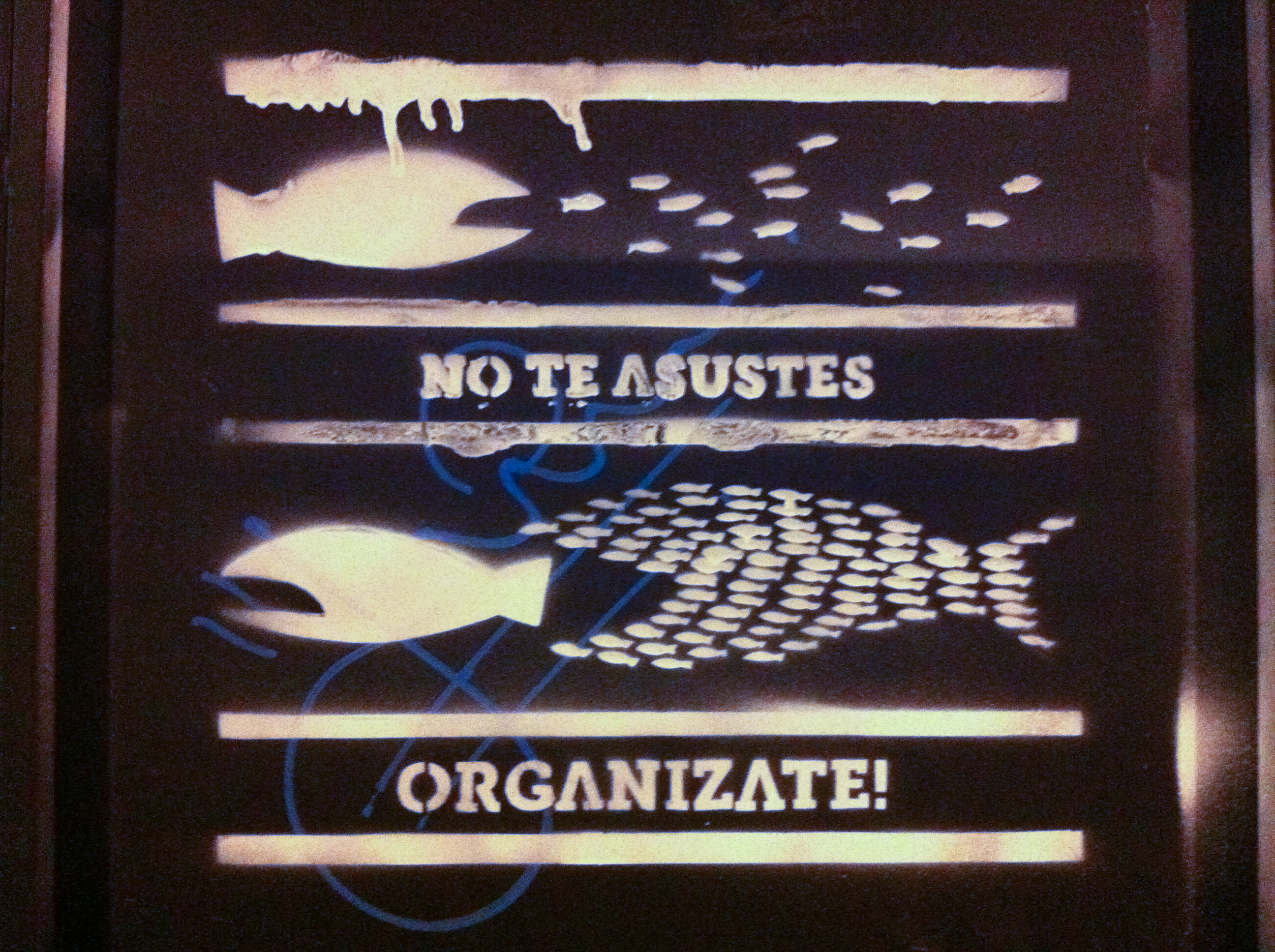
Image result for good metaphor

This metaphor sums up my argument. The top shows how government officials try to rule over minorities. The bottom shows many minorities and I joining together and amending an unfairness. We have a voice and can use our power.

Wednesday, March 6, 2019

Simple is Smart

In my second unit of Light, Sound, and Time, my class and I focused on how sound works. Although people don't notice it, sound is always present. Silence can't be acquired because our body constantly makes noise and our environment is always in movement. I think that noise gives humans comfort to give the feeling that they are not alone. I like having background noise around me when I work, or else I would be lost in my thoughts. On the mathematical side of the world of sound, we learned how to use the speed of sound in calculations to find wavelength and frequency. We also did a simulation on how life would be with bad hearing. This unit made me thankful for my good hearing and more considerate to help out people if they can't hear as well.

After learning about how sound waves work and their important impact in our daily lives, the class and I created our own diddley bows to create unique sounds. Diddley bows are one stringed guitars that influenced the development of blues music. They can be made with items lying around the house. I used an old tin can, a plank of wood, three screws, two batteries, and a guitar string to make mine. Everyone used the same length of wood, but different sized guitar strings, cans, and nails. My teacher taught us step by step how to make the diddley bow. I had trouble screwing the screws in that help secure my can and string, but my peers assisted me.

JMP, Diddley Bow, (2019)

The yellow and green line is the middle of the diddley bow's neck. The other lines signify the four harmonics. A harmonic is a tone produced on the diddley bow by touching the vibrating string at one of the marked lines.

I calculated the wavelength by dividing the string's frequency by the speed of sound. Then, I calculated the four harmonics with the frequency and wavelength. 

JMP, Harmonics, (2019)
My diddley bow demonstrated many key science principles from our lessons in class. The pitch varies based on the material, tightness, and the length of the string. Amplitude is how tall the wave is, which means it has a high volume. The amplitude depends on the size of my can. My can is the biggest of the class, so I have the highest amplitude; aka the loudest volume to hear my sound. The wavelength is determined by the frequency. If the frequency of my string goes up, the wavelength goes down.

Here is a labeled sketch of my diddley bow. 

JMP, Diddley Bow Sketch, (2019)
When I pluck my string, the sound wave travels to the can, where the sound gets amplified. With my slider, I can vary the pitch to make different sounds. I had to make sure that the string was tight so it would make a richer sound when I would pluck it. It was cool to see my classmates’ finished products because we all ended up with different pitches of sound.

Variables that Changed the Sound 
  • Size of hole in can
  • Size of can
  • Size of plank of wood
  • String material
  • How tight string was
  • Size of battery
  • Where battery was placed
  • Where slider was moving
I calculated the angles, sides, and area of the space between the nut and resonator. I also calculated the volume of the resonator, because I wanted to know how the amount of space in there affects the sound.
 JMP, Calculations, (2019)
In conclusion, this unit has taught me a lot. It made me conscious of my surroundings and take the moment in. I have been spending less time on social media and more time admiring the sounds and visuals around me. I would love to make another diddley bow with more strings and with frets so I can tune it. For now, I will practice how to make some music on this first version.

Thursday, February 14, 2019

Pictures Last Forever

What is light?
I never took time to think about this complicated question until my class, “Light, Sound, and Time”, challenged me to answer it. First, we studied the different parts of the human eye and what they do to process images. We compared that process to a camera, which showed that the two have similar procedures! Then, the class and I delved into the science of light. Light is electromagnetic radiation, which can appear as either waves or particles. The range in frequency of the light waves is categorized in the Electromagnetic spectrum. Our eyes can only see the “visible light” portion of the EM spectrum, which are the colors of the rainbow. Other living things, such as the helmet gecko lizard or mantis shrimp, can see different light waves that humans can’t because of how their eye is formed. The science of diverse eyes amazes me, and it makes me wonder what certain colors I see differently than other organisms.

This unit was very interesting to me because it made me realize the science of my everyday life. It felt personal and important to know how my eyes receive light mathematically and scientifically.

For this Action Project, I built a pinhole camera that could successfully take a picture. It was a very tedious procedure. My pinhole camera was constructed from an empty oatmeal container, aluminum, and black paint. I made my lens by poking a pin through the aluminum. Then, I cut a quarter-sized hole into the container for a space for the lens. I made a shutter for the lens too so I can control how long the film gets exposed to light. I painted the inside of the camera black because that color absorbs stray light that doesn’t hit the film. If it was painted white, any other colors, or not painted at all, the photons of light coming from the pinhole would scatter around and overexpose the image.

JMP, Pinhole Camera (2019)
JMP, Lens, (2019)
The Latin School of Chicago generously gave our class a 90 minute photography lesson on how to take pictures with our pinhole cameras and how to develop the film. A red dinosaur was the main focus of my intended photo. I took off the shutter for three minutes and thirty seconds to let the light photons shine only through the pinhole and imprint an image onto the film in the back of my camera.
Hiu To, Untitled, (2019)
The light bounced off the top of the dinosaur and hit the paper in a straight line toward the bottom of the film. The light that bounced off the bottom of the dinosaur hit the top of the paper. This projected the image upside down on the film inside the camera.
JMP,  Pinhole Image, (2019)
Here is the image that my pinhole camera took. About 75% of the image appears to be underexposed because there isn’t a figure on it. The other 25% has the checkerboard backdrop and the back of the dinosaur. I think only part of the image was successful because my pinhole was too small and the film was not correctly aligned with the pinhole. I am still proud that I was able to get an image of something.


JMP, Projection of Dinosaur, (2019)
My camera does not use reflection or refraction to produce an image; as it is an example of light
behaving like a particle because the paper absorbs the light photons. If the light was behaving like a wave, the waves would reflect off the film and would not produce an image. Since the photons stay in air and not another medium while it hits the film, it does not use refraction. It uses visible light from the electromagnetic spectrum in order to produce the image.

Here are my calculations that show the interactions between the light rays, the camera, and the dinosaur.


JMP. Calculations, (2019)

This STEAM Action Project is now my favorite I have done at GCE. I loved my experience in a dark room in my freshman year at another school, and I always wished to use a dark room again. It felt very accomplishing to create a working camera and get an image. The project felt very connected to the math I calculated. The process was very tedious, but I just spent more time to make sure my work is precise.

Driven by Life, Liberty, and the Pursuit of Happiness

My class called "A Nation's Argument" taught me how to formulate an argument. I was tested on the first to day to argue against someone for a topic my teacher knew I was not passionate about. It challenged me to push my opinion aside and create an opposite argument. The class dissected the argument and pointed out that there were reasons made to support the conclusion. The professional term for reasons in an argument are called "premises". We practiced how to create premises after studying examples of arguments. We spent majority of our class time studying the Declaration of Independence. There were many reasons why that declaration became a famous paper that America looks up to. Since we wanted to have a closer look at an executive argument, we went to The Chicago Circuit Courthouse in downtown. There was only little time to visit so we had thirty minutes to study a case. After having thoughtful conversations with my class about what makes a successful argument, I created a Declaration of Study that will meet my unalienable rights as a student and a citizen.

In this Declaration, I am arguing for a course that will fit three unalienable rights: life, liberty, and the pursuit of happiness. It is important to have these rights met wherever teenagers are: home, outside, or in school. GCE does not offer drivers education, which is an important life skill that teenagers should acquire in high school. I am exercising my right of freedom of speech to tell GCE in a professional manner that I want this new asset to my learning experience as a global citizen.

GCE Lab School is an environment that offers students integrated courses, form relationships with peers, and develop life skills. These skills teach students how to support themselves and become fruitful citizens of the future. High schoolers learn so their open mind can benefit themselves and the people they talk to. If GCE intends to inspire, prepare, and connect students to the world outside of the classroom, then there should be courses that embrace our unalienable rights. I believe that we, the students at GCE Lab School, deserve a drivers ed course. Our unalienable rights are life, liberty, and the pursuit of happiness. Learning how to drive will give us a glimpse of what it means to be at the best possible condition of life. Driving is an independent activity that gives us the liberty to get to places on our own. Most importantly, the pursuit of happiness will be connected. Having a license at an early age will let us pursue a happy life in a safe way. This Declaration takes basic human rights into consideration.

The guiding question for the creation of this course is...

Why is driving an important life skill?


I will now list my premises for the argument. Premises are statements that will justify my argument.

P1. GCE teaches courses that follow their mission of giving their students hands-on learning experiences.

P2. A majority of high schools in the Chicago-land area offer hands-on drivers education classes to students.

P3. 
GCE's has life skill classes such as cooking, self-defense, and design.

P4.  Learning how to drive is a life skill.

P5. Driver's education class after high school cost hundreds of dollars. 

P6. 50% of GCE's students receive financial aid.


In the Industrial Revolution, an innovative  inventor named Henry Ford invented the automobile. This new invention drastically changed transportation in the world. It gave people the right to go wherever they wanted. Since cars give people the independence to travel freely, I want to follow the trend as early as possible. I have a busy schedule, so relying on public transit can be a disadvantage sometimes.

I will need a couple of resources in order for this class to be successful.

1. A Driver's Education teacher will teach the course material and ensure I know the information
2. In order to take the road test, I will need a car.
3. Informative videos from the state about the safety of driving.
4. Handbook about driving to pass the written test.
5. A guardian to accompany me when I practice driving with a permit.
6. An empty, quiet classroom so I can focus.

In this rigorous course, I will learn about the importance of driving, how to safely drive, and earn a license. I want to be able to pass the road and written test and feel prepared to drive on my own. I will take advantage of this class because I might not be able to afford to after high school. In college, I will need to know how to drive because the skill will make errands and the commute to work more convenient. Some jobs require new hires to have a license, which will place me at a disadvantage if I don't take this class now.

Conclusion: Therefore, drivers education should be one of GCE's life skill courses.

Citations

White, Jesse. “Driver's Handbook – Illinois Rules of The Road 2017.” Drivers Education of America, 14 Feb. 2018, www.driverseducationofamerica.com/illinois/drivers-handbook-illinois-rules-of-the-road-2017/.

Friday, January 18, 2019

A Dual Between Money and Love

Post-production brings pieces of film together. A director may have a lot of good footage, but the footage must be put together in a talented way to be able to tell a story. Sound effects give the video more flavor, and really makes the audience feel like they are involved with the film's space. The art of sound effects intrigued me so much this term. As I practiced making sound effects to lay over a silent film, I discovered its very hard to make the right sounds and place them at the right time. The sound of knocking on a wooden door isn’t the same as banging metal. Walking on sand makes a smoother noise than walking on legos. Getting into the mind of a foley artist opened my mind to think outside the box. Ever since taking this course, I have paid more attention to the details in video production and try to figure out the secrets behind them.

I picked the movie Slumdog Millionaire to study its editing, sound production, cinematography, acting, costume design, and production design, and create a dualist review on it. When I saw this movie as a child, I was confused and did not understand what was happening. Now, since I paid attention to the details the movie artists put into the movie, I gained a better sense of what idea they wanted to put in the film.

One Fish, Two Fish, Red Fish, Dead Fish

In my last term for my STEAM class, I took a course called Frontiers. This term was the first ever time that course was introduced to GCE L...

Popular Posts